
How to Get a Professional Finish on Your Crochet Garments
Making a beautiful garment is already an achievement.
But when you also take care of the finishing details, the result can reach a whole new level.
Here are the key steps I follow myself to make sure every project is beautifully finished — with that boutique feel.
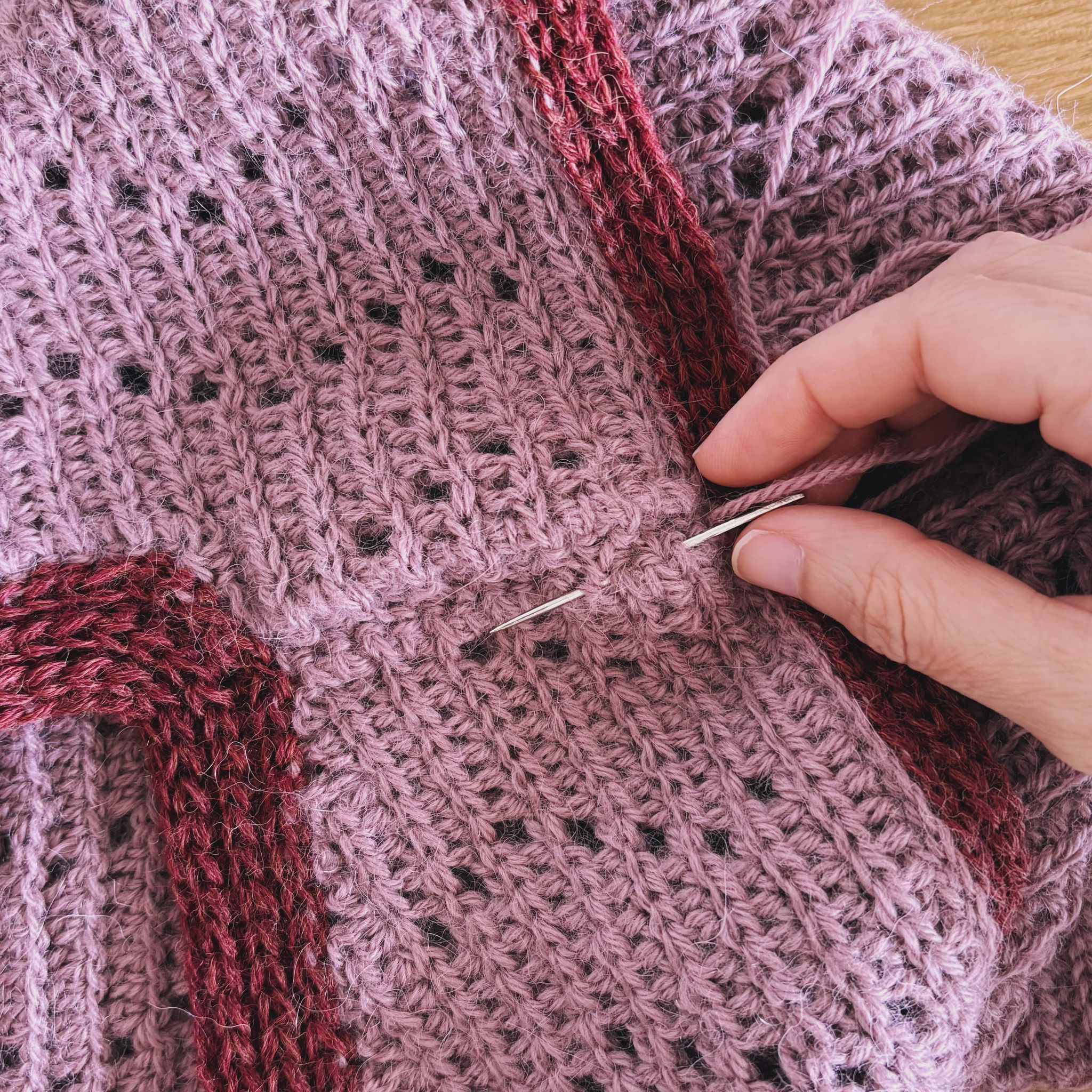
TABLE OF CONTENTS
Weaving in Ends — with Care (and Confidence)
Everyone recommends using a tapestry needle with a blunt tip…
But here’s what I do — and it works even better: I use a sharp-tipped needle.
It lets me go through the fibres of the stitch, so the yarn catches more securely and stays put. I rarely lose an end with wear.
My recommendations:
- Don’t cut the yarn too close to the fabric.
- Weave it in thoughtfully, without pulling too tight.
- If you can, weave in ends as you go. It’s neater and easier to manage.
There’s no single perfect method. Try different approaches and stick with what works for you.
Blocking Your Garment: the Most Overlooked Step (and the Most Rewarding)
Blocking is one of those steps many makers skip… but it can completely transform the final look of your garment.
What is Blocking?
It’s giving your garment its final shape, setting the measurements, evening out the stitches and leaving everything softer with a better drape.
It’s useful for:
Improve the overall shape
Enhancing lace stitches or textures
Correcting uneven stitches
Softening the garment
Setting the measurements (especially useful when grading multiple sizes)
When Should You Block?
I’d say almost always, but especially:
When the pattern says to
For garments (sweaters, vests, tops…)
When your stitches have come out uneven
When you want a more polished, professional finish
Blocking Methods (choose the one that works best for your yarn)
Spray Blocking
My lighter go-to option. Ideal for delicate yarns or when you’d rather not fully wet the garment.
Lay the garment flat on a towel or blocking mat.
Mist it with water until it’s damp, not soaked.
Shape it gently with your hands.
If needed, pin the edges or corners in place.
Leave it to dry completely before moving it.
Wet Blocking
Works well for cotton, wool, linen and other natural fibres.
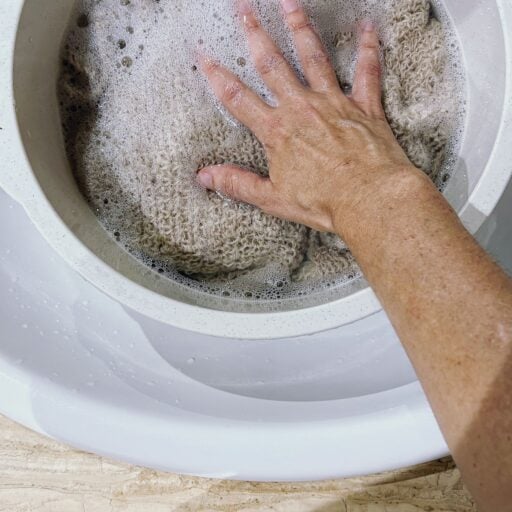
Fill a basin with lukewarm water and submerge the garment for 10–15 minutes.
Remove it gently — no rubbing or wringing.
Press it into a towel to remove excess water.
Lay it flat and shape it carefully.
Pin in place if needed and leave to air-dry.
Steam Blocking (Advanced)
This method is more delicate and can damage some fibres.
If you use it:
Never place the iron directly on the garment.
Steam only, from above.
Only use it if the yarn allows it — and always test on a swatch first if you’re unsure.
What Do You Need for Blocking?
- A flat surface (a towel, table or blocking mat)
- A towel
- Foam blocking mats.
- Rust-proof blocking pins or wires. There are sets made specifically for this — I’d recommend investing in a good one.
- Spray bottle
- Gentle soap for delicate garments
Which Blocking Method to Use by Fibre Type
Block? ✅ Yes
Method: Wet blocking or spray blocking
Note: Don’t overstretch. It sets beautifully with water.
Block? ✅ Yes
Method: Wet blocking
Note: Highly recommended for softening any stiffness.
Block? ✅ Yes
Recommended method: Wet blocking or spray blocking
Note: Can stretch easily. Don’t pull too much when blocking.
Block? ⚠️ It depends
Recommended method: Gentle wet blocking
Note: Not all superwash wools hold their block well. Avoid direct heat.
Block? ✅ Yes
Method: Wet blocking
Note: Responds very well. Handle with care.
Block? ✅ Yes
Recommended method: Wet blocking
Note: Very soft and delicate. Flat drying is essential to avoid distortion.
Block? ✅ Yes
Recommended method: Spray blocking or gentle wet blocking
Note: Depends on the blend ratio. Always test on a swatch first.
Block? ⚠️ It depends
Recommended method: Light spray blocking
Note: Blocking is less effective on acrylic. Avoid high heat or a direct iron.
One More Tip…
If you’re unsure, test with a small swatch first. Block it using the method you have in mind and see how the yarn responds before applying it to the whole garment.
The time and care you’ve put into making your garment deserves to be honoured right to the end.
Blocking, weaving in ends, reviewing… all of that is part of making something with care and intention.
Save this page to come back to whenever you need it. It’s here to guide you through every last detail of each project.

Kenya | SRC Designer
